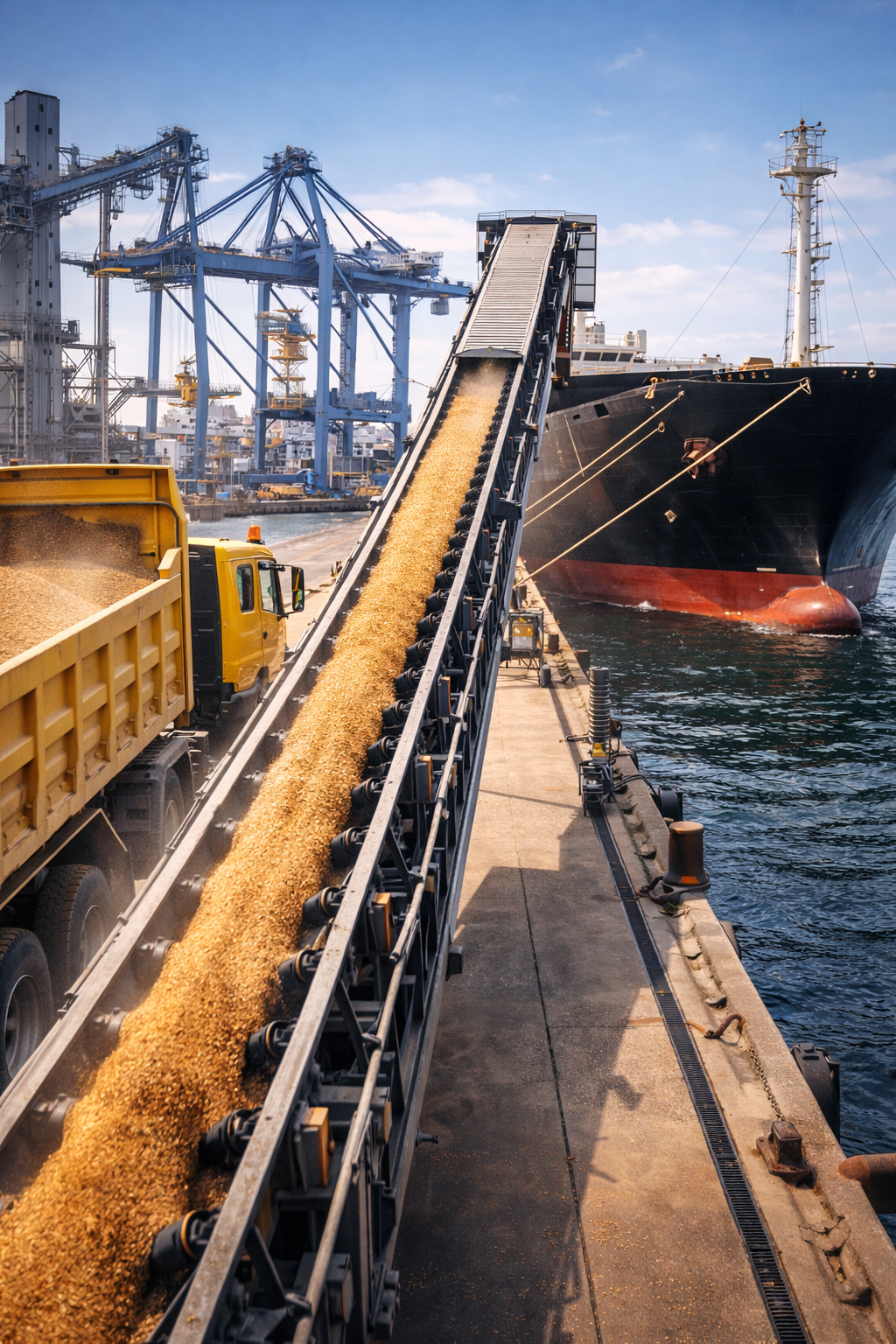
The modernization is aimed at adapting the infrastructure for core cargo types — grains and oilseed crops. This includes preparing operational areas and technological units to ensure stable cargo handling across different receiving and dispatch modes, while eliminating unnecessary operational bottlenecks.
Why this upgrade is needed (plain explanation)
In real operating conditions, the main time losses do not occur during the actual cargo transfer itself, but at the process interfaces:
- waiting for vehicle arrival or acceptance,
- uneven supply of raw materials,
- delays caused by internal traffic and flow organization,
- downtime due to uncoordinated queues and routing.
The goal of the upgrade is to smooth the overall process and eliminate unnecessary pauses, allowing each vehicle to complete its operational cycle faster.
Expected operational impact
Increased throughput
By optimizing the technological chain and organizing internal cargo flows, the site can handle a higher volume of vehicles per shift or per day without overloading personnel or equipment.
Reduced vehicle downtime
A key performance indicator is the waiting time for loading/unloading and the total time a vehicle spends on site. Reducing downtime delivers a direct benefit for carriers and improves overall operational rhythm.
More stable operating schedules
When processes are balanced and predictable, it becomes easier to plan queues, allocate equipment, and form shipment lots without emergency adjustments.
Supported cargo handling process flows
The infrastructure is adapted to support the core cargo handling schemes for grain and oilseed operations:
- Railcar → Truck
- Railcar → Warehouse (vessel lot accumulation) → Vessel
- Truck → Vessel (direct option)
This approach enables flexible operations depending on the client’s logistics model, transport availability, and shipment formation requirements.
Why this matters now
Grain and oilseed logistics are characterized by pronounced seasonal peaks. During these periods, the main challenge is not demand volume, but the infrastructure’s ability to handle increased flows without congestion or operational disruptions. The modernization is therefore focused on preparedness for peak loads and on reducing operational risks.