Optimization of Cargo Handling Process Flows
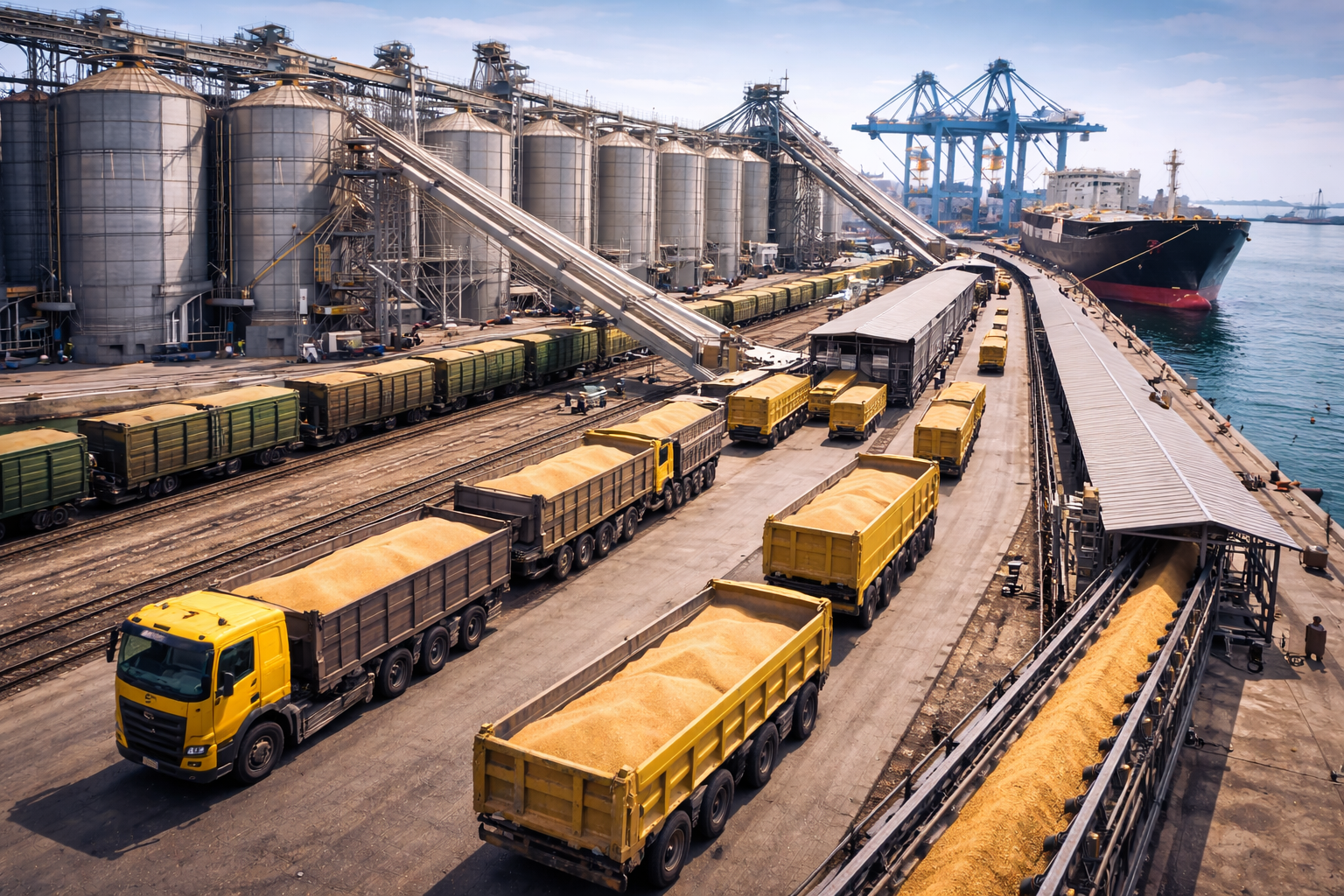
As part of an infrastructure upgrade, PORT-SERVICE LLC has adapted its production areas to handle grains and oilseed crops using several standardized cargo handling process flows. This provides clients with logistics flexibility and ensures a stable, predictable process across different supply and shipment scenarios.
Process flows supported by the adapted production areas
Within the infrastructure upgrade, PORT-SERVICE LLC has adapted its production areas to operate under the following cargo handling process flows:
- Railcar → Truck
- Railcar → Warehouse → Vessel
- Truck → Vessel (direct option)
What this means for clients (B2B impact)
1) Predictable logistics
When process flows are standardized and supported by infrastructure, clients can plan railcar/truck arrivals and lot formation more reliably, reducing disruptions to operating schedules.
2) Flexibility for real operating conditions
Different suppliers, transport schedules, and shipment requirements (with or without accumulation) can be handled by selecting the most efficient cargo flow for each case.
3) Less downtime at process handoffs
The optimization is aimed at reducing delays between stages (receiving → transfer → loading), where operational bottlenecks most often occur.
4) Service standardization
Clearly defined process flows mean a controlled and predictable operation—especially important for B2B clients during peak periods.
PORT-SERVICE LLC continues to improve operational efficiency by focusing on practical results: steady throughput, faster vehicle turnaround, and a stable production cycle.